
Art Deco Étagère / Plant Stand with Adjustable Shelves, Czechoslovakia, 1930s
-

-
-
-
+11
-


To make a purchase, please register for our B2B program
Product description
Product description
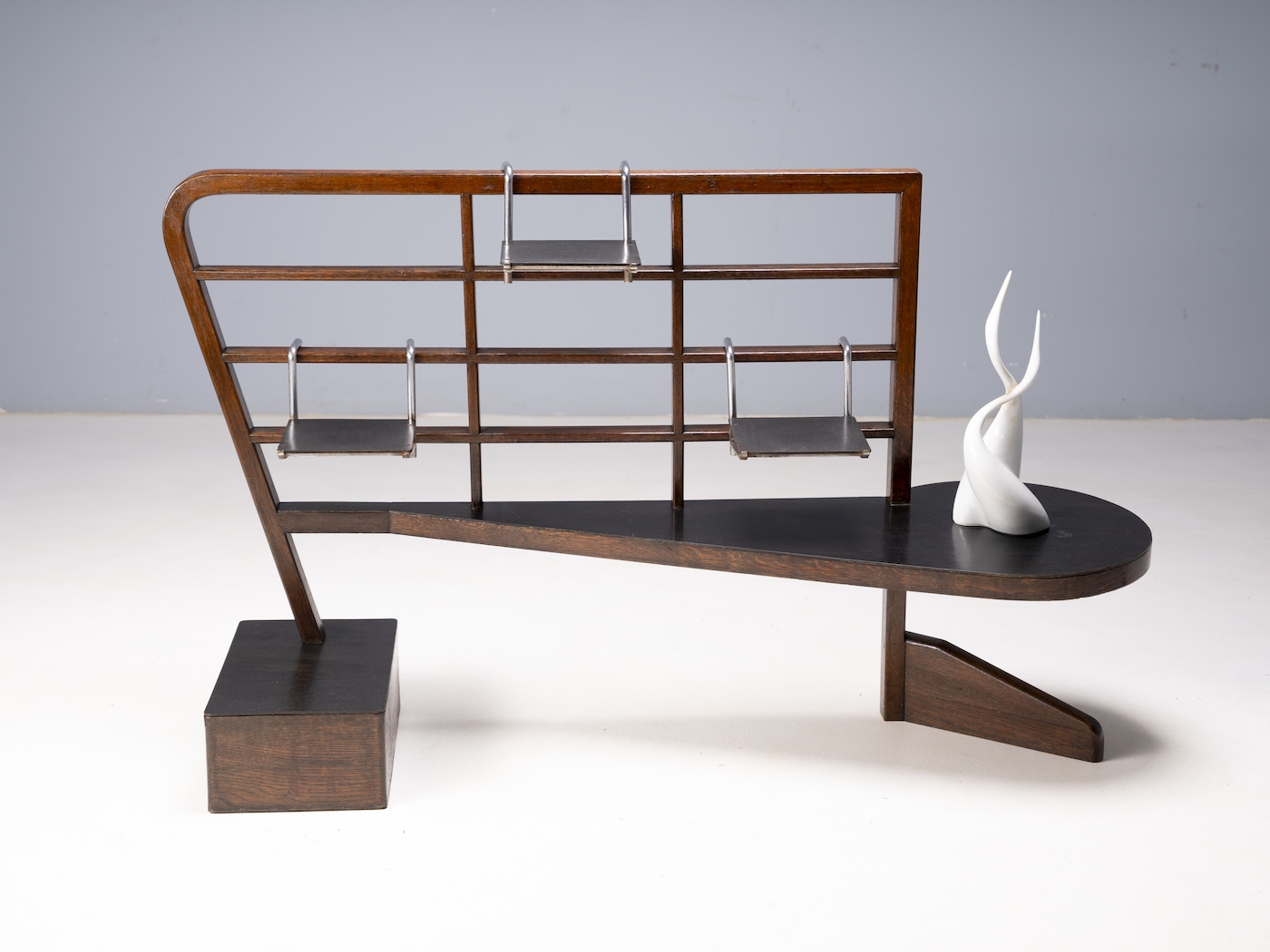
Exceptional Art Deco / Functionalist étagère from Czechoslovakia, dating from the 1930s, designed as a versatile display stand for plants, decorative objects and small sculptures.
The inventive asymmetrical construction combines dark-stained wood, metal and black phenolic paper laminate (Pertinax), a technical material associated with modern industrial production during the first half of the 20th century. The contrast between the warm wood, black surfaces and polished metal elements emphasizes the distinctly modernist character of the design.
The most striking feature is the geometric wooden grid supporting six individual suspended metal shelves with Pertinax surfaces. Each shelf can easily be repositioned by hanging it from different horizontal rails, allowing the user to create different compositions according to the size and character of the objects displayed.
The lower section incorporates a long asymmetrical display surface, also finished with dark Pertinax and elegantly rounded at one end. The base itself is equally unconventional: one side is supported by a geometric box-shaped plinth, while the opposite side rests on a slender leg terminating in a horizontal foot.
The result is a remarkable piece somewhere between a plant stand, étagère and display unit. Although conceived as functional furniture, its asymmetrical geometry, unusual combination of materials and flexible shelving system give it an almost architectural quality.
Origin: Czechoslovakia
Period: 1930s
Style: Art Deco / Functionalism / Modernism
Materials: stained wood, phenolic paper laminate (Pertinax), metal
Suspended shelves: 6
Feature: adjustable shelf arrangement
⚠️ NOTICE:
The stattue displayed on the shelve are for illustration purposes only and are not included in the sale.
Historical background
Czechoslovak interior design of the 1930s was strongly influenced by the principles of Functionalism and Modernism. Traditional woodworking was increasingly combined with industrial materials such as metal, glass and various types of technical laminates.
Pertinax, produced from layers of paper impregnated with phenolic resin and compressed under pressure, was valued for its strength, stability and durability. Although primarily developed for technical applications, its distinctive dark surface also lent itself particularly well to the visual language of modernist objects.
Multi-level plant stands and flower tables were a popular element of interwar interiors, allowing plants and decorative objects to be arranged at different heights. This particular example represents a remarkably inventive interpretation of the type, distinguished by its asymmetrical construction and ingenious system of repositionable shelves.
Style and use
The étagère can still be used for its original purpose as a sophisticated plant stand. Its adjustable shelves, however, make it equally suitable for displaying ceramics, glass, small sculptures, books or collectible objects.
Its striking asymmetrical silhouette also allows the piece to function independently as a sculptural interior object, particularly effective in contemporary, Functionalist or eclectic interiors.
Interesting facts
he most distinctive feature is the system of six individually repositionable shelves. Simple metal supports hook over the horizontal wooden rails, allowing the arrangement to be changed according to the objects being displayed.
For furniture of its period, this represents a remarkably modern concept of flexible, user-adjustable design.
Technical specification
| Date of manufacture: | 1930s - 1940s |
| Condition: | original |